I still remember the exact moment it hit me. I opened my analytics after months away from the blog and stared at the numbers. Traffic that used to feel steady had quietly collapsed. The posts that once brought in readers were still there, but the people were gone. I had no way to tell them I was back. No list. No emails. Nothing. Just an empty dashboard and the slow realization that two years of consistent publishing had left me with almost no direct connection to the audience I thought I’d built. That was the day I finally understood what email marketing for bloggers actually protects you from.
Why I Thought I Didn’t Need an Email List
I had a long list of excuses, and they all sounded reasonable at the time.
Traffic was growing. Search was working. Social shares happened sometimes. I told myself the readers would just keep coming back on their own. Building a list felt like extra work I didn’t have energy for. I also worried I didn’t have anything “good enough” to offer yet, and that asking for emails too early would feel pushy.
I kept seeing the same excuses from other people online. One blogger on Reddit admitted they focused only on traffic and social for a long time because email felt like something they could set up “later.” Visitors showed up once and disappeared. Another creator shared that they delayed starting because they had too many unanswered questions-which platform, what to write first, how often to send. They waited until they felt ready. By the time they started, they already regretted the lost months.
I heard the same pattern on other platforms too. People said they were still figuring out their niche, or that they didn’t want the time commitment, or that a proper freebie felt overwhelming. The excuses were almost identical to mine. We all thought the blog itself was enough.
It wasn’t.
Read More : I Wasted 500+ Hours Manually Publishing My Blog – Here’s How I Fixed It (And You Can Too)
What Going Quiet Actually Cost Me
When I burned out and stopped posting, the traffic drop was predictable. What I didn’t expect was how complete the silence felt. There was no group of people I could email to say I was taking a short break or that new posts were coming. The readers I’d earned simply moved on.
I had to rebuild almost from scratch when I returned. Old posts still ranked in places, but the regular visitors were gone. Every new piece of content had to fight for attention all over again.
I wasn’t alone in this. One person on Reddit described focusing for years on getting traffic only to realize most visitors came once and never returned. After they finally added a simple signup and a short welcome sequence, they started seeing sales and engagement from people who had visited weeks earlier. They said it made them realize how many potential connections they’d already lost.
Another creator who built a large following on a social platform later wrote that their biggest miss was never collecting emails along the way. When the algorithm shifted, the reach dropped. They estimated they could have had tens of thousands of direct contacts if they had started from day one. Instead they were left with rented attention.
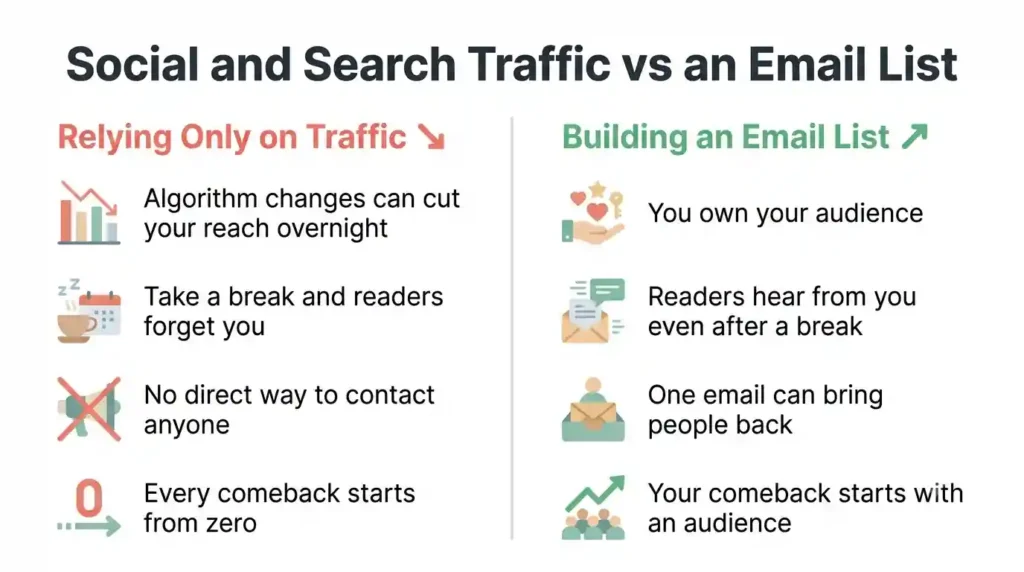
I kept seeing versions of the same story. Bloggers who went quiet for a while, came back, and discovered they had no reliable way to reach the people who used to read them. The common thread was always the same: traffic is temporary. A list is not.
What going quiet cost me was the compounding effect of those early readers. Every person who would have joined in the first year was a relationship I never got to keep.
My Biggest Regret as a Writer? Not Starting a Daily Newsletter Sooner: Email Marketing for Bloggers: What Ignoring My List for 2 Years Cost MeWhat Email Marketing for Bloggers Actually Looks Like
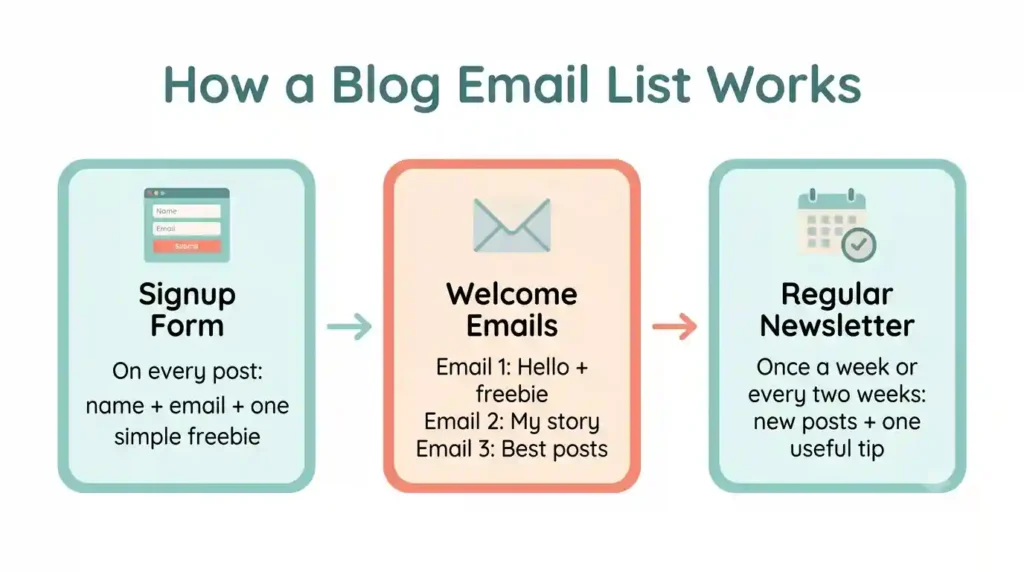
At its simplest, it’s three things.
First, a signup form somewhere on your site. It can sit in the sidebar, at the end of posts, or as a quiet box that appears after someone has been reading for a minute. The form asks for an email address and maybe a first name. That’s it.
Second, a welcome email (or a short series of them). When someone joins, they get an automatic message that says thanks, tells them what to expect, and delivers whatever simple promise you made-maybe a short checklist, a favorite post, or just a note that you’ll send occasional useful updates.
Third, a regular newsletter. This is the ongoing part. You send something useful on a schedule you can actually keep. It might be a new post, a quick tip, a personal update, or a roundup of things you’ve been thinking about. The goal is to stay in front of people who already chose to hear from you.
That’s the whole system. No complicated funnels required at the beginning. You collect the address, say hello, and then show up consistently enough that people remember who you are.
The difference between this and relying on search or social is control. Algorithms change. Platforms shift. An email address is something you can reach directly, on your own timeline.
Read More : 7 Best Klaviyo Alternatives
How I’d Start My List Today, Step by Step
If I were starting over tomorrow, I’d keep it almost painfully simple.
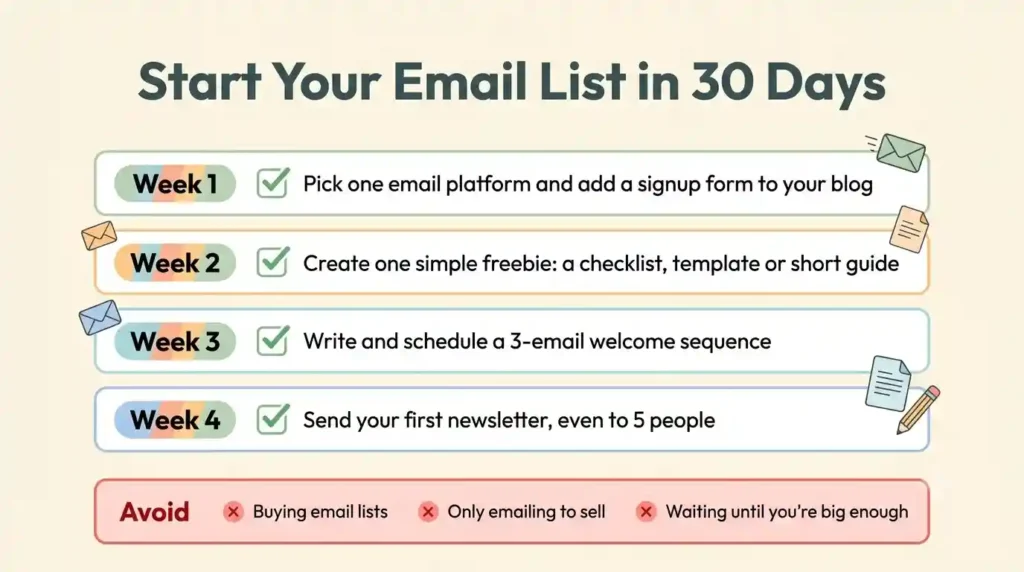
I’d pick one basic platform that lets me collect emails and send messages without a steep learning curve. I wouldn’t spend weeks comparing every option. I’d choose something that works, connect it to my site, and move on.
Next I’d create one clear signup offer. Nothing elaborate. A short PDF with the five most useful tips from my best posts, or a simple “new post notification” promise, or even just “occasional notes from me about [topic].” The offer only needs to be good enough that a reader who already likes the blog is willing to hand over their email.
Then I’d write a three-email welcome sequence and stop there.
Email 1: Thanks for joining, here’s the free thing I promised, and a short note about what the list is for.
Email 2: A useful tip or a link to one of my stronger older posts, plus a question that invites a reply.
Email 3: A bit of my own story or a practical recommendation, and a clear sense of how often I’ll write.
I’d schedule those three emails to go out automatically over the first week or so. After that, I’d plan to send a real newsletter every one or two weeks—whatever pace I can maintain without burning out again.
I’d put the signup form in two or three places: the end of every post, a simple sidebar, and maybe a quiet popup after a reader has been on the page for a while. I wouldn’t force it everywhere.
The whole setup would take a weekend, not a month. The point isn’t perfection. The point is to stop losing every reader the moment they leave the site.
Mistakes to Avoid
The most common beginner mistakes I kept seeing online match the ones I would have made.
One person shared that they treated the list like a sales machine too early. People signed up and then immediately got pitched. Unsubscribes came fast. The fix is simple: the first few emails should deliver value and set expectations before any selling happens.
Another frequent issue was writing for “everyone” instead of the actual people who already liked the blog. Early lists grow better when the content stays close to what brought people in.
A third mistake was waiting for the perfect lead magnet or the perfect design. Several creators admitted they delayed for months because the freebie never felt ready. Starting with a plain promise works better than waiting for something polished that never ships.
I also saw people focus more on the tools and formatting than on the actual writing. The tool matters less than showing up with something worth reading.
The pattern is consistent: overcomplicating the start, selling too soon, or waiting for ideal conditions. All of them cost time and readers.
Read More :TOP 5 Social Media Advertising Platform
FAQs
Is email marketing for bloggers still worth it in 2026?
Yes. Search and social still matter for discovery, but they remain unpredictable. A list gives you a direct line that doesn’t disappear when an algorithm changes or when you need to take a break.
Do I need a fancy freebie to get started?
No. A clear promise of useful updates or a simple short guide is enough at the beginning. You can always improve the offer later once you have a few dozen subscribers and some feedback.
How often should I send emails?
Start with a pace you can keep for months. Every one or two weeks is realistic for most solo bloggers. Consistency matters more than frequency.
What if my list stays small for a long time?
A small list of people who actually open and reply is more useful than a large list of people who ignore you. Treat the early subscribers well and the list grows more naturally.
Will people even want to hear from me?
The ones who already read your posts often do. You’re not cold-emailing strangers. You’re offering a way for interested readers to stay connected.
Conclusion
If I could go back and talk to the version of me who was publishing steadily in 2025, I’d say only one thing: start the list now. Don’t wait until the traffic feels big enough or the freebie feels perfect. Every reader who leaves without giving you a way to reach them is a connection you may never get again.
Email marketing for bloggers isn’t complicated. It’s just the difference between hoping people come back and knowing you can still talk to them when life gets in the way. I learned that the hard way. You don’t have to.